How Slow Are Sloths?

Sloths are fascinating creatures well-known for their lethargic movements and lifestyle. They spend the majority of their time sleeping—upwards of 20 hours each day. When they do move, their pace is so leisurely that it could take them a month to traverse a mere kilometer. Typically, they won't venture more than 40 meters on any given day and even their eating habits are unhurried, with a noticeable sluggishness in their method of pulling leaves and branches to feed.
Why Are Sloths Slow?
Sloth's sluggishness is actually an effective survival strategy. Mostly active during the twilight hours, they avoid the gaze of their primary predators, birds of prey, by minimizing sudden movements. Sloths can briefly sprint if danger demands it, but their energy reserves sustain this burst of speed only for a short duration.
Vital Statistics
Sloths aren't just characterized by their slow movements, but also by their distinct physical traits and vital statistics:
- Size: Ranges from 58-70cm in length and 4-10kg in weight.
- Lifespan: Averages 10-20 years in the wild. Two-toed sloths can live up to 30 years in captivity, while three-toed sloths generally survive only a few months.
- Social structure: Primarily solitary, although females can sometimes be found associating.
- Habitat: Dense primary rainforests in South America.
Adaptations of Sloths
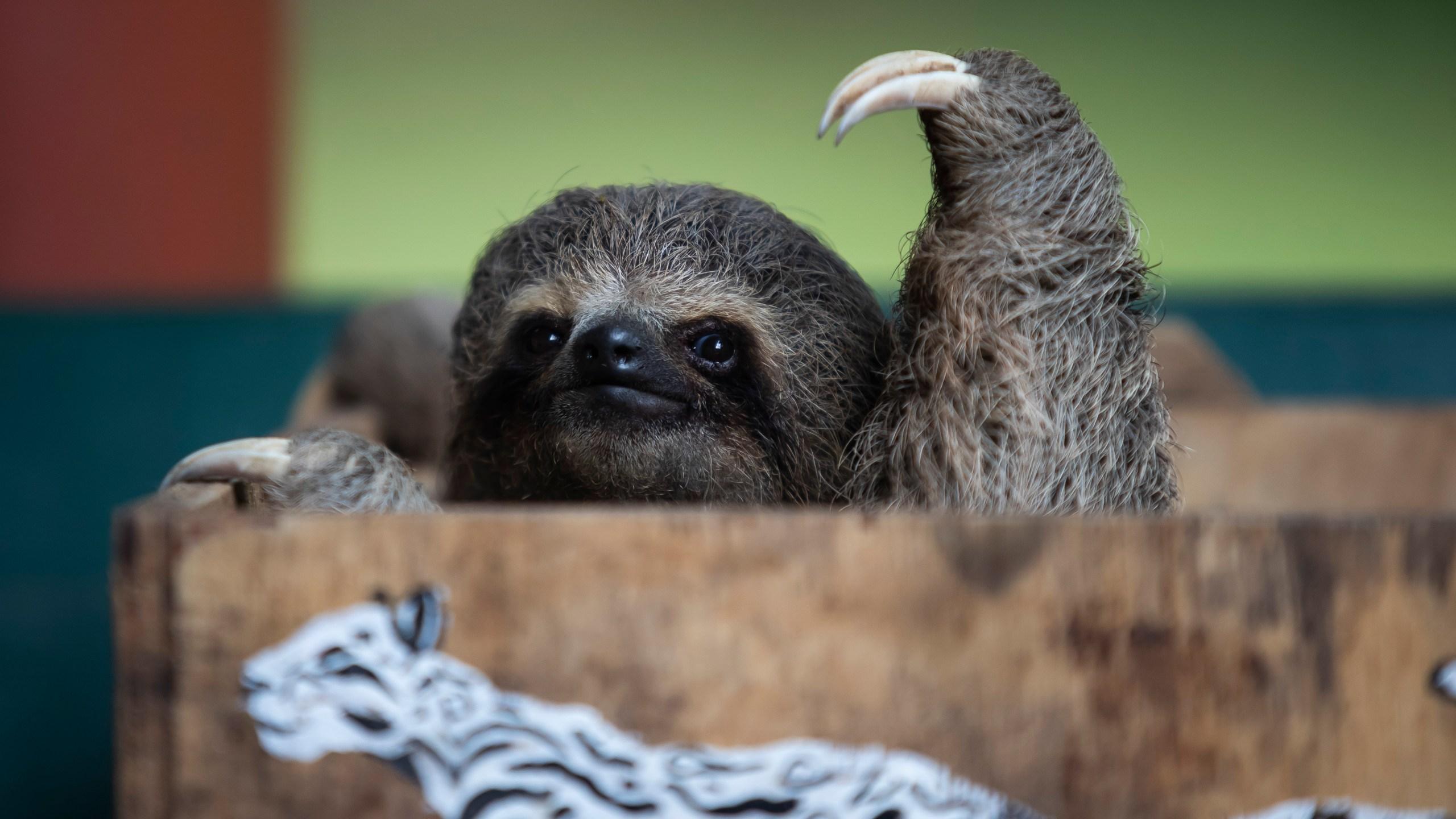
The slow metabolism of sloths allows them to thrive on less or lower-quality food. Their body temperature adjusts with the environment, enabling them to tolerate larger fluctuations than any other mammal and to conserve energy by reducing body temperature at night. Unique in their muscle composition, sloths are incapable of shivering to generate heat, relying instead on their dense fur and solar basking for warmth.
Camouflage and Diet
Aided by algae that grow on their fur, sloths blend into their leafy environs with ease. This symbiotic relationship not only provides concealment but also nutrients either ingested or absorbed through the skin. Additionally, sloths are careful defecators, descending to the ground and covering their excrement, possibly to fertilize their territory and minimize movement.
Upside-Down Existence
Sloths are uniquely adapted for an inverted lifestyle, with powerful claws for gripping and a physiology suited to hanging from trees. Remarkably, they conduct most of their activities—eating, sleeping, mating—while suspended upside down. Even as adept swimmers, they remain more vulnerable on the ground due to their specialized adaptations for arboreal life.
Distinguishing Between Two-Toed and Three-Toed Sloths

While often lumped together, two species of sloths exhibit distinct features and behaviors. Three-toed sloths are primarily diurnal and rely mostly on Cecropia leaves, whereas two-toed sloths are nocturnal omnivores that can maneuver slightly faster. These differences reflect diverse adaptations to their respective ecological niches.
Sloths: An Important Part of the Ecosystem
Sloths contribute to their ecosystem not only as a food source for predators but also by hosting unique communities of insects and other organisms that rely on the sloth's fur and feces. Their remarkable healing abilities offer potential insight for medical advancements in humans.
Status and Threats
Habitat destruction is the primary threat to sloths, alongside poaching for meat, fur, and the pet trade. Conservation efforts are hampered for three-toed sloths due to their dietary restrictions, making them less viable candidates for captive breeding programs.
Conclusion
In summary, sloths are not just slow-moving curiosities but complex creatures with a host of unique adaptations that allow them to survive and thrive in their rainforest habitats. These gentle animals continue to intrigue and educate us on the myriad ways life can adapt to the challenges of nature.