Introduction to the Forest Aerialists
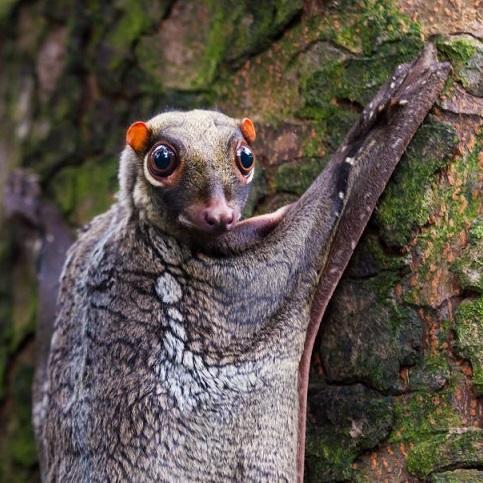
Deep within the heart of South-East Asia's lush rainforests, a remarkable spectacle of nature's ingenuity takes place. Among the dense foliage, two species of enigmatic creatures glide seamlessly from tree to tree. They are not birds, nor are they typical mammals. They are the Philippine Flying Lemur and the Malayan Flying Lemur, colloquially known as "colugos." These nocturnal gliders are an integral part of the biodiversity that the ASEAN Regional Centre for Biodiversity Conservation works tirelessly to protect.
Unveiling the Philippine Flying Lemur
A Glimpse into the Philippine Colugo's Life
The Philippine Flying Lemur, scientifically known as Cynocephalus volans, is a sight to behold. With its large, keen eyes perfectly adapted to a nocturnal lifestyle, the Philippine Flying Lemur navigates the forest canopy with startling efficiency. Its gliding membrane, or patagium, allows it to soar for distances of up to 100 meters, an adaptation vital for both foraging and eluding potential predators.
The Malayan Flying Lemur
Understanding the Malayan Counterpart

Meanwhile, its close relative, the Malayan Flying Lemur (Galeopterus variegatus), shares the same habitat range but has distinct physical characteristics. This species possesses a more uniform coat color that helps in camouflaging among the dense foliage—elaborate patterns that merge seamlessly with the dappled light of the rainforest.
Misconceptions Amidst Marvels
Not Lemurs, Nor Marsupial Flying Squirrels
Contrary to their common name, these 'flying lemurs' are neither lemurs nor marsupials. Their unique evolutionary path places them in the order Dermoptera. As such, they are more closely related to primates than to any species of marsupials or squirrels. Highlighting such information is crucial to understanding and conserving these species, as their role in Asia's ecosystems is significantly different from that of their distantly related look-alikes.
Conservation Efforts and Education
ASEAN and Singapore Zoological Gardens' Role

The ASEAN Regional Centre for Biodiversity Conservation and institutions like the Singapore Zoological Gardens are at the forefront of educating the public and conserving these fascinating creatures. By providing a sanctuary for research and recreation, they raise awareness on the importance of conserving the delicate ecosystems of Southeast Asia. These efforts are not only preserving the unique species of the region but are also sustaining the rich tapestry of life that thrives within the rainforest.
The Ecosystem and Its Fringe Dwellers
The Unique Ecological Niche of Colugos
Colugos play a vital role in their habitat. As frugivores, their diet consists primarily of soft plant parts, which they forage at high altitudes. Their defecation habits contribute to the dispersion of seeds, creating a symbiotic relationship that nourishes and perpetuates the growth of various plant species within the rainforest. Thus, their survival is synonymous with the health of the rainforest itself.
Final Thoughts on Forest Aerialists
The Future of Southeast Asia's Colugos
In closing, the story of the Philippine Flying Lemur and Malayan Flying Lemur is one of awe and inspiration—a reminder of the intricacies of nature and the responsibilities we hold in safeguarding our planet's ecosystems. As conservationists and enthusiasts work to protect these forest aerialists, we are reminded of the beauty and fragility of life that soars silently above us in the verdant canopy of Asia's rainforests.